Teaching
14 Classrooms
Well-ventilated, naturally lit classrooms with CBC-compliant furniture and display boards. Grades 7–9 have mounted projectors.
From Kindergarten through Grade 12 and into vocational careers — Rain Edge schools and training centre give every learner a quality education in a nurturing, inclusive environment.
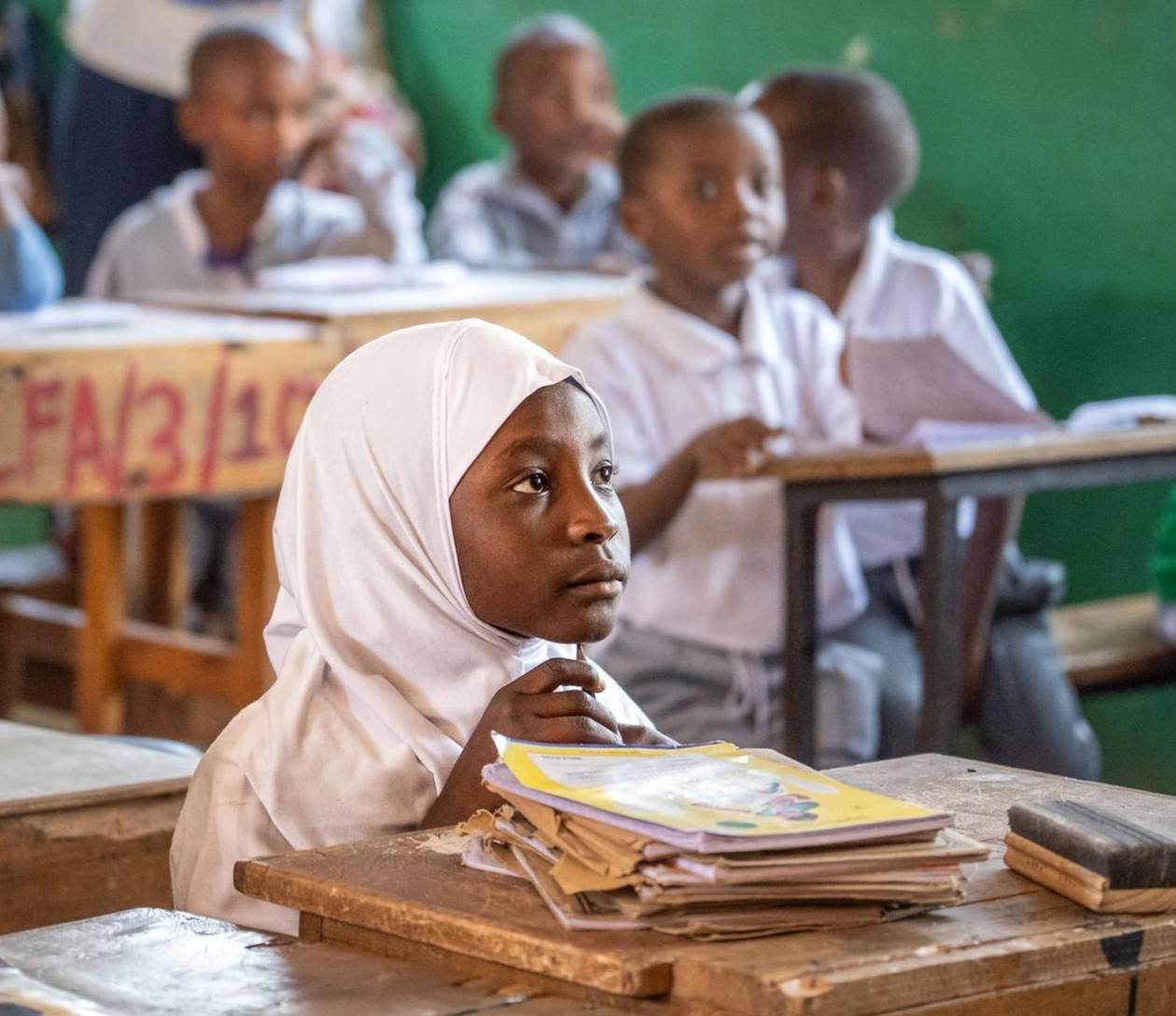
Our CBC curriculum goes beyond the textbook — building thinkers, readers, and problem-solvers from day one.
Dates are approximate. Final calendar issued at start of each term.
Our primary campus offers a safe, well-equipped environment where learners are excited to come to school every day.
Well-ventilated, naturally lit classrooms with CBC-compliant furniture and display boards. Grades 7–9 have mounted projectors.
30 student workstations with internet access running educational software and coding platforms. Used daily by Grades 6–9.
Over 2,000 books across fiction, non-fiction, and CBC reference materials — appropriate for KG through Grade 9.
Dedicated science lab for Grades 4–9, equipped with microscopes, chemistry kits, biology specimens, and safety stations.
Large grass field for football and athletics. Two hard courts for basketball and volleyball. Daily PE for all year groups.
Education at Living Fountain Academy is not confined to a classroom. We build well-rounded learners through clubs, sports, and community involvement.
Inter-house sports tournaments, KSSSA competitions, and a weekly PE schedule designed for every ability level.
A school choir, annual drama production, visual arts exhibitions, and a cultural day celebrating the diverse heritage of our learners and staff.
After-school clubs that go deep into subjects learners are passionate about — from robotics to debating to environmental conservation.
Our admissions process is straightforward and designed to be stress-free for families. All applications are processed within 10 working days.
Complete our admissions form from the school office or website. Attach a birth certificate, NEMIS number, and any previous school leaving certificate.
We invite the learner and parent/guardian for a tour. Learners above Grade 3 complete a brief literacy and numeracy assessment for CBC level placement.
If a place is available, an offer letter is issued within 10 working days. Resident children are placed automatically upon welfare intake approval.
Accept the offer, pay the first term's fees (day learners), collect the uniform list and booklist, and your child is ready to begin.
| Level | Per Term | Per Year |
|---|---|---|
| Pre-Primary (PP1–PP2) | KES 480 | KES 1,440 |
| Lower Primary (Gr 1–3) | KES 560 | KES 1,680 |
| Upper Primary (Gr 4–6) | KES 640 | KES 1,920 |
| Junior School (Gr 7–9) | KES 720 | KES 2,160 |
| Resident Children | FREE — Fully Sponsored | |
Fees include school feeding, CBC workbooks, and activity levy. Uniform purchased separately. Bursaries available — apply at the school office.
Every teacher at Living Fountain Academy is TSC-registered, degree-qualified, and trained in CBC delivery.
Provides overall leadership, oversees CBC implementation, staff development, and learner welfare across the school.
Supports the Head Teacher in day-to-day operations, coordinates learner welfare, and supervises school policies.
Promotes reading culture, coordinates English and Kiswahili instruction, and runs the school literacy clubs and drama.
Leads mathematics instruction across all levels using CBC manipulative-based approaches and peer-learning strategies.




Accreditations & Awards

Students choose their subject cluster in Form 2. Each pathway prepares learners for KCSE and for specific university and career pathways.
KCSE candidates have an extended revision term. Mock exams held in February of examination years.
Our secondary campus gives students the infrastructure they need to compete at the highest level — locally and nationally.
Separate, fully equipped laboratories for Physics, Chemistry, and Biology — each with safety stations, fume hoods, and modern apparatus.
15 computers with high-speed internet, used for lessons, research, and our Business Track micro-enterprise simulation modules.
5,000+ titles including KCSE past papers and academic journals. Open 6:30am–7:00pm daily, including weekends during term.
A 600-seat hall used for morning assembly, national examinations, drama productions, and our annual prize-giving ceremony.
Safe, supervised boarding accommodation for students from outside the area. Resident house parents provide 24-hour supervision.
Football pitch, basketball court, volleyball court, and athletics track. The school fields competitive teams in seven sports at county level.
Admission is competitive but open to all qualified applicants. Priority is given to Rain Edge Primary graduates and learners from low-income households.
Submit a completed form with KCPE/KPSEA results (or most recent report), school leaving certificate, and a recommendation letter.
Applicants sit an assessment in English, Mathematics, and Science, followed by an interview. Results determine placement and scholarship eligibility.
Successful applicants receive admission letters outlining class placement, fee structure, and uniform guidelines.
All new students join a one-week orientation — meet teachers, explore co-curricular activities, and settle into school life before classes begin.
| Category | Per Term | Per Year |
|---|---|---|
| Form 1–2 (Day) | KES 10,500 | KES 31,500 |
| Form 3–4 (Day) | KES 12,000 | KES 36,000 |
| Form 1–2 (Boarding) | KES 25,000 | KES 75,000 |
| Form 3–4 (Boarding) | KES 28,000 | KES 84,000 |
| Resident Children | FREE — Fully Sponsored | |
Fees include KCSE levy, textbooks, and activity fees. Boarding includes meals and laundry. Bursaries of 25–100% available for qualifying students.
Every secondary teacher holds at least a first degree in their subject area plus a TSC teaching certificate. Several hold postgraduate degrees.
Provides overall leadership, oversees KCSE academic performance, staff development, and ensures the school maintains high standards.
Supports the Principal in managing the school, coordinates learner discipline and welfare, and supervises policy implementation.
Leads Biology, Chemistry, and Physics; mentors science teachers; and promotes practical STEM learning through laboratory work and competitions.
Oversees English, Kiswahili, and Literature; promotes effective communication; and coordinates debating and public speaking programmes.
Coordinates History, Geography, CRE, and Business Studies, ensuring learners develop critical thinking and a broad social understanding.
Leads KCSE Mathematics preparation with a focus on problem-solving strategies, individual pupil tracking, and county competition teams.



Accreditations & Recognition

Our centre is fully equipped to support four categories of disability — with trained SNE staff, adaptive tools, and purpose-built accessible spaces. Non-disabled learners are equally welcome in our inclusive classrooms.
Learners with partial or total loss of sight, including those using Braille, screen readers, or low-vision aids.
Deaf and hard-of-hearing learners, including those who communicate via Kenyan Sign Language (KSL).
Learners with physical and other health impairments, including wheelchair users and those with limited mobility.
Learners with intellectual disabilities, specific learning differences (dyslexia, dyscalculia), and autism spectrum learners.
All programmes run for 1 year and lead to a TVET CDACC Certificate. Learners meeting the standard may continue to Level 2 and Level 3 qualifications.
Computer fundamentals, MS Office, internet skills, basic web design, and digital entrepreneurship. All workstations equipped with screen readers and adjustable desks for VI and POHI learners.
From hand-sewing basics to machine operation, pattern drafting, and garment construction. Workstations adapted for single-hand use and wheelchair access. NITA Grade Test on completion.
Woodwork, joinery, furniture making, and basic construction skills. Workshop features adapted tools and bench heights for POHI learners. Linked to our enterprise woodworking unit.
Bread, pastry, confectionery, and food hygiene. Learners work in our functioning bakery enterprise — a real production environment with income generation. Open to all disability categories.
Full Kenyan Sign Language (KSL) competency for deaf learners and for hearing interpreters. Graduates can work as professional KSL interpreters in courts, hospitals, and schools. Recognised by KNEC.
Crop and vegetable farming, small-scale animal husbandry, and agribusiness. Practical training on our working farm. Produces food for the orphanage and schools. Adapted tools available for POHI learners.
Every aspect of our skills centre was designed with inclusivity as the starting point — not a retrofit. Here is what that means in practice.
We develop the whole person — not just vocational skills. Entrepreneurship, confidence, and community are part of every learner's journey.
Every learner completes a practical enterprise attachment in one of our social enterprises — bakery, water plant, or farm — gaining real work experience and income skills.
Weekly self-advocacy sessions build confidence, communication, and self-representation skills — especially important for learners with disabilities entering the job market.
Learners complete a community service module and participate in outreach events — building social cohesion and demonstrating that persons with disabilities are active contributors to society.
Admission is open to all Kenyans aged 16 and above. No KCSE certificate is required. Learners with disabilities are given priority during intake. Two intakes per year: January and September.
Download from our website or collect from the skills centre. Attach a copy of any ID, birth certificate, or National Council for Persons with Disabilities (NCPWD) card if applicable. No academic transcripts needed.
Visit the centre to tour the workshops, meet the instructors, and complete a short hands-on aptitude activity in your preferred programme. Our SNE team will assess the support provisions you need.
Accepted learners receive an offer letter detailing their programme, start date, required tools/uniform, and fee structure. PWD learners receive a disability support plan outlining all accommodations.
A dedicated one-week orientation introduces learners to the campus, adaptive facilities, peers, instructors, and the CBET assessment system before formal training begins.
| Learner Category | Per Term | Per Year |
|---|---|---|
| Day Learner (General) | KES 5,000 | KES 15,000 |
| Day Learner (PWD — NCPWD Card) | KES 2,500 | KES 7,500 |
| Boarding Learner | KES 12,000 | KES 36,000 |
| Boarding Learner (PWD) | KES 8,000 | KES 24,000 |
| Rain Edge Resident Children | FREE — Fully Sponsored | |
Fees include TVET CDACC assessment levy and basic tools. HELB bursaries available for TVET learners. Additional bursaries funded by donor support. NCPWD card holders receive a 50% fee waiver.
All instructors hold TVET CDACC or NITA trainer qualifications and are trained in Special Needs Education (SNE) by the Kenya Institute of Special Education (KISE).
Holds a diploma in Special Needs Education (KISE) and a degree in Technical Education. Leads all CBET programmes and TVETA compliance for the centre.
A licensed Special Needs Education officer trained at KISE. Develops learner support plans, coordinates adaptive tools, and liaises with NCPWD for learner registration.
A qualified Kenyan Sign Language interpreter registered with the Kenya Sign Language Research Project. Teaches the KSL programme and interprets in all HI-inclusive classes.
Holds a BSc in Information Technology and a TVET CDACC trainer certificate. Specialist in assistive ICT: screen readers, adaptive keyboards, and accessible web design.
NITA-certified trainer with 8 years in garment manufacturing. Adapts all sewing stations for single-hand use and wheelchair access. Leads NITA Grade Test assessments.
NITA-certified joinery instructor. Maintains the adapted workshop and ensures all bench heights and power tools are accessible for POHI learners.
Holds a KEBS Food Safety certificate and a TVET CDACC Level 3 Bakery qualification. Manages learner integration into our live bakery enterprise.
A diploma-holder in Agriculture from Egerton University. Trains learners on crop production and agribusiness using the centre's operational farm.




Registration & Certification
Whether you are a parent looking to enrol, a donor who wants to sponsor a learner's training, or a volunteer teacher — we would love to hear from you.